As January quickly comes to an end, I find myself wondering where the month has gone! My school reopened on January 8, so I am back to the day to day routine of teaching, coaching soccer, and living in rural Kenya. When it was time to leave Nairobi, I wondered whether or not it would be difficult to readjust to life at Icaciri, whether or not people would be happy about our return. The readjustment could not have been any easier. We were welcomed with open arms and enormous smiles, with lots of shouting in Kikuyu and hardy handshakes by everyone in the community. It is quite refreshing to be back in a place that I love and feel loved by so many people, to be back in a place where I wake up to sunshine and children laughing at the primary instead of car alarms and shouting. I feel more at peace here than ever before, like our return has made us even more a part of this place and these people. Our first week back was filled not only with classes, but every afternoon we had a different home to visit, and every time we left full of mukimu, ndoma, or some other Kikuyu dish.
Upon our return, we were greeted by Njeri, the daughter of our school's secretary, and her younger brother Njau, who readily informed us that all of the children were wondering where we had been and why we were gone for so long. She is a good ally to have, because she also let us know that they refer to Kari and I as "the tall mthongo" and "the short mthongo" in Kikuyu, and that they are not really sure we are human because they think our skin is the color of pigs!
The newest part of my routine here involves Gatundu Children's Home. Kari and I have begun volunteering there each Saturday, and it is quickly becoming one of my favorite parts of the week. Every time that we go, we are greeted with laughter and hugs. We play and dance; we eat sukuma wiki and ugali and then help clean the compound. The kids spend so much time just petting our hair because they think it is "so soft" and that theirs feels like steel wool. It is a home that houses 43 children from the Gatundu area who have been orphaned by AIDS or poverty and who have nowhere else to go. They are children whose relatives, the people in traditional African society who would care for them, have abused and mistreated them. Florence, the manager of the home, goes on a visit to see each child before they are taken, and accepts only the most desperate cases. There is Mary Wambui, a skinny 8 year old whose seventy year old grandfather was discovered to be abusing her before she was taken at the age of six. There is Ester Wainana, a light-skinned girl of 16 who is mentally retarded, she cannot understand how to put on pants (she puts both legs in one hole) and who was sexually abused by every man who passed through the home of her aunt and uncle because she could not tell. There are Micheal and Patrick, brothers who were taken from a market in Kikuyu town where they lived with their mother and her "customers." There are twin boys, Njoroge and Muthoni, who are five years old, who wrestle and fight like any kindergarteners. There is Kamau who can climb to the top of a mango tree quicker than a monkey. There is Njambi who just finished at Kenya High School, one of the best national secondary schools in Kenya; she wants to go to university and study pharmacy once she gets her KCSE results. There are Susan, Naomi, Jane, Simon, Mbari, forty-three children who have a home, who have food to eat, and a chance to go to school because of Florence and all of the people, local and foreign who support them. On our first visit, Florence explained to us why she works as hard as she does, and why she knows that this is where the Lord has called her to work even though she turned it down at first. Now when the Lord asks her "where were you when I was hungry? when I was lonely? when I was sexually abused?" she will have an answer.
When I look at the children here and think about the pain that has marked their young lives, I realize anew that the battle against AIDS, poverty, and injustice is one that we must all fight. Because one of us is affected, we are all affected. Whether we have skin the color of pigs or hair like steel wool, we are all human. When one of us suffers, we all suffer; when one of us, even the smallest child, is abused, we all feel the pain. When one person is degraded, we all feel the shame because we are all human beings. God poured out His grace on the world in the form of Jesus Christ, and in doing so, he offered us joy and freedom, yet there can be no real joy, no real freedom for anyone, unless there is joy and freedom for all.
May the grace of our Lord be with you all.
Lauren

Saturday, January 27, 2007

Monday, January 08, 2007
Safari Njema
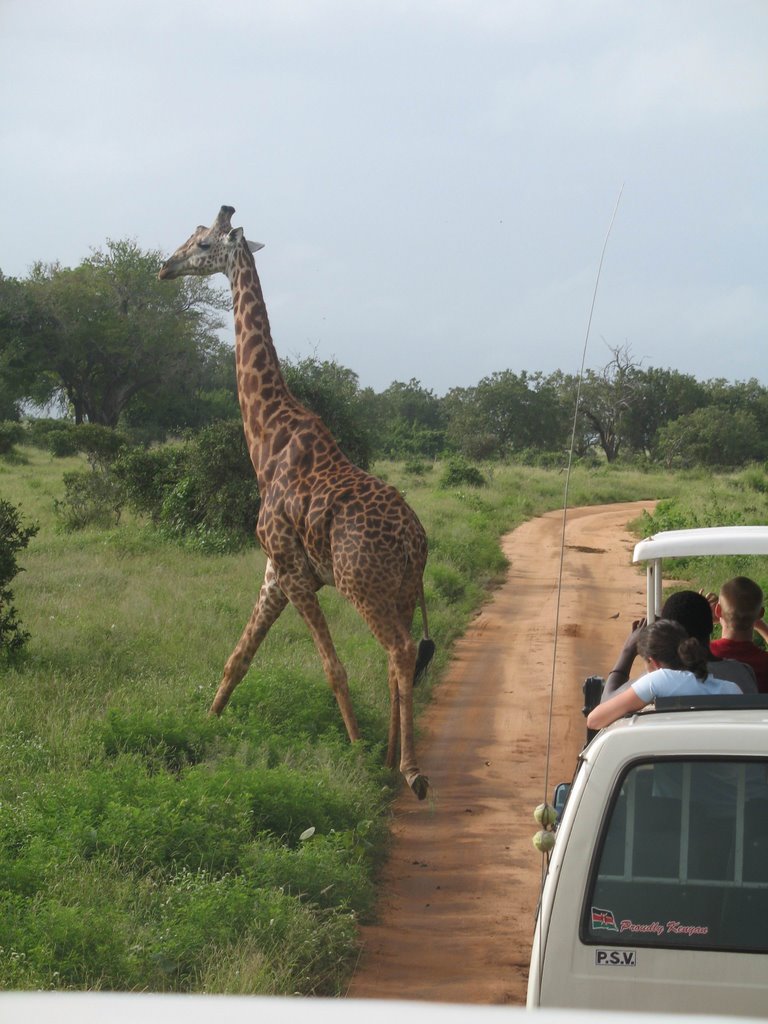
Tsavo National Park is about five hours east of Nairobi... it is a place with dense underbrush and extreme landscapes... the perfect place for stories and legends. Beginning in March of 1898, when the railroad was being built from Kenya to Uganda, the lions of Tsavo are said to have devoured over 142 railway workers as they camped by the sight. The workers built fences, set traps and ambushes, but the maneless male lions were too sly to be caught and managed night after night to drag the workers from their tents. Finally, on December 9, 1898, engineer J.H. Patterson shot the first of the two lions and the second followed three weeks later. Their reign of terror was over.
Last week, all of the volunteers travelled to this fabled park for a weekend retreat. Unfortunately, we saw none of the famous man-eating lions, but we did see elephants, zebras, water buffalo, and a few giraffes who held up traffic as they crossed the road! It was a wonderful way to end our time here in Nairobi as Kari and I prepare to head back to Icaciri later this afternoon, and it gave all of us a chance to come together and rest from our normal routines. It was also a great reminder of the amazing history and wildlife that this country has to offer... what a wonderful experience!
Saturday, December 30, 2006
December Newsletter
It has been a busy and eventful month for me. My school closed for the December holiday on November 23, so Kari and I moved to Nairobi to live and work. This city is quite a change from Gatundu, and I have learned about an entirely different aspect of life in Kenya. When we first got here, we weren't sure what sort of things we would be doing, but soon discovered that we would be moving from rural life straight into the center of an urban slum, Korogocho, to be specific. Every morning we travelled from our home in Westlands through downtown Nairobi to the nearest matatu stage and then walked the remainder of the way to Tumaini Church through the roads and alleyways of Korogocho. I must admit that the first day I was absolutely terrified. The only instructions we were initially given was to "carry nothing, wear no jewelry, and dress in very casual clothes." What were we getting into?
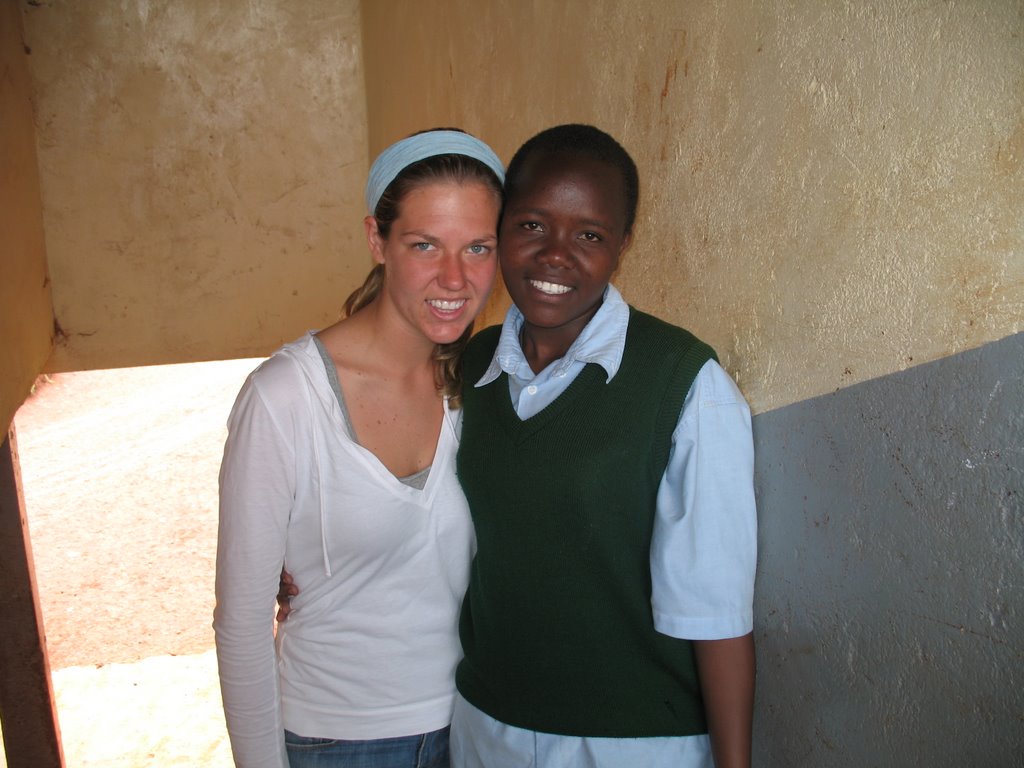
As it turns out, we had the opportunity to participate in a camp run by the TULIP ministry that encourages both discipleship and scholarship in the girls that it sponsors. This organization takes girls from the slums, girls who have few options in life, and teaches them first about Christ and then pays for their education. The girls themselves are amazing. They are open and honest about their lives, they are not ashamed or embarrassed by the circumstances of their birth. My very first day at camp, two girls from my Bible study group walked me around the area and asked quite frankly "Have you ever been in a slum before?" I had no idea how to respond.
After camp ended, Kari and I began tutoring a smaller group of girls. We discussed chemistry, biology, history, English, business studies, Christian education, basically everything they study in school except Kiswahili, which became a running joke between us as they taught us new phrases each day. As we made our way to the church which we turned into a schoolhouse each morning, we got to know not only the girls, but also the residents of the pathways we walked. We became accustomed to the sight of many things: the man selling bottles of a sticky red "cure-all" medicine where the paved road ended and the dirt began, the boys with carts of boiled eggs and sausages at the matatu stage, the women sitting on potato sacks under umbrellas peddling half rotten bananas and avocados, the old and the young sifting through piles of garbage that lined the roads. Most of all we got to know the children who inhabit Korogocho, or at least the small corner that we know, and each morning I looked forward to them running full force in our direction screaming "Wambui! Wangari! How are you?" We picked them each up individually, swung them around in the air, and set each one down laughing, only to repeat the process again. I left on our last day, my white t-shirt covered with smudged, dirty fingerprints from dozens of tiny hands that hugged me on the way out.
I am not sure what to think of the time that we spent in Korogocho. I am thankful for the opportunity to see another way of life, to know the faces and the stories, yet it brings me back to the same questions that I cannot answer. On our last day, one of the girls took us to her home for tea. Leon is one of five children supported solely by her mother who sells vegetables at a makeshift stand down the road. Their home is made of sticks and mud with a dirt floor and a tarp ceiling to keep out rain. The outside is lined with scraps of tin and the smell of sewage is ripe everywhere you turn. How do I react? Do I feel sadness? Anger? Pride? I am angry at the circumstances that have forced them into this life, sad at the brokenness of our world, yet proud of who they are and happy for what they have.
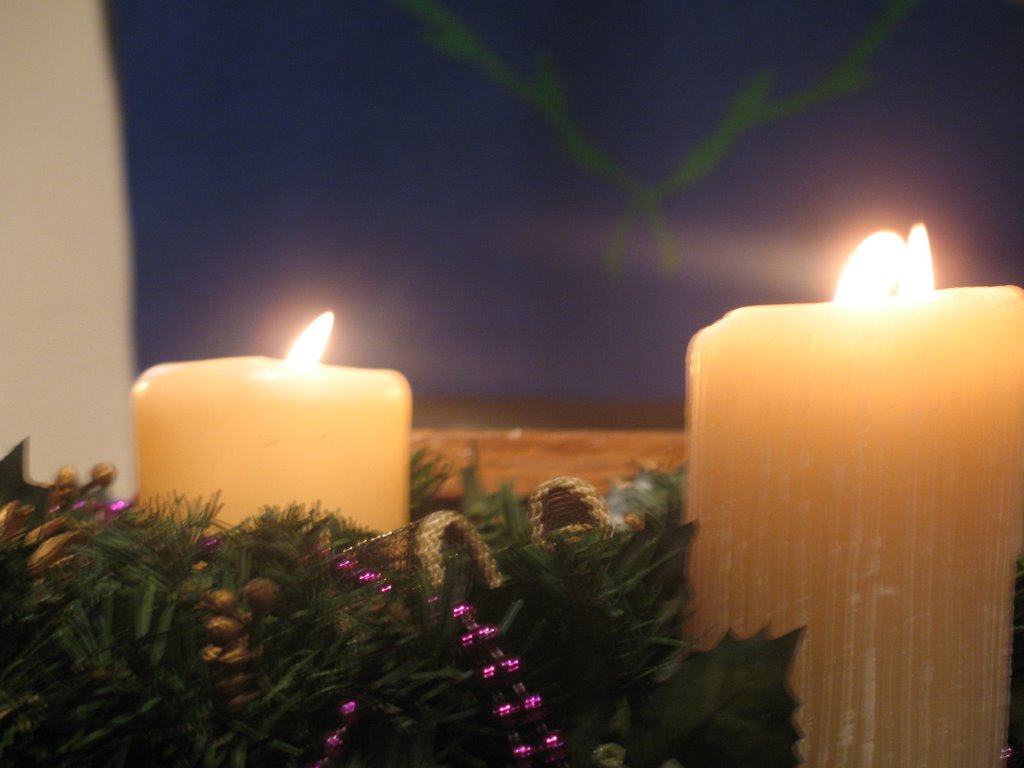
This month we celebrate the coming of our Lord into the world, the birth of Jesus Christ. Throughout Advent I have sung the familiar carol "O Come, O Come Emmanuel" each week. As I sat in candlelight at the Christmas eve service, I began to think about what it means that Christ would come into a world of such brokenness and dwell among us. I wondered at the circumstances of his birth and life. Then I realized, of course Christ was born in a manger to poor, marginalized parents, that is how most of the world lives today. Of course the smell of dirt and manure permeated the air, that is the smell most of the world knows. Emmanuel, God with us, God with all of us. The same God, with us in Korogocho and Darlington. The same Christ offers us respite from the reality of our own sin and brokenness. And He is not only with us, He is also in us. Christ is the hope, the light, and the beauty in each of us. He is the love and joy of God given to all of mankind.
Rejoice, rejoice! Emmanuel, shall come to thee, O Israel!
Thursday, December 28, 2006
Merry Christmas
 Holidays this year have been decidedly different than any other time in my life... on Thanksgiving I ate Chinese food with three of the other volunteers and on Christmas eve, I had Ethiopian for lunch with some friends in Nairobi... neither what my mom would usually allow! Also, December is one of the hottest months in Kenya, so instead of getting colder, the temperature has been steadily rising... definitely a change from Lexington, VA.
However unusual it may have been, Christmas eve was one of the most delightful days I have spent here. I started off the morning listening to Pastor Bob preach a sermon about how God's grace arrives in our world through Jesus Christ, and as we stood to take communion, I could feel the in pouring of God's love and peace into my life. I could sense the joy that we have only in Him, and it provided a welcome rest from all of the questions and frustrations that have plagued me recently.
After worship, we travelled to Askah's house (one of the members of the NILC congregation) to sing Christmas carols and pray over her as she recovers from surgery. It was such a blessing to be a part of the community here, to see the faith that Askah and her family demonstrated in the face of enormous difficulty.
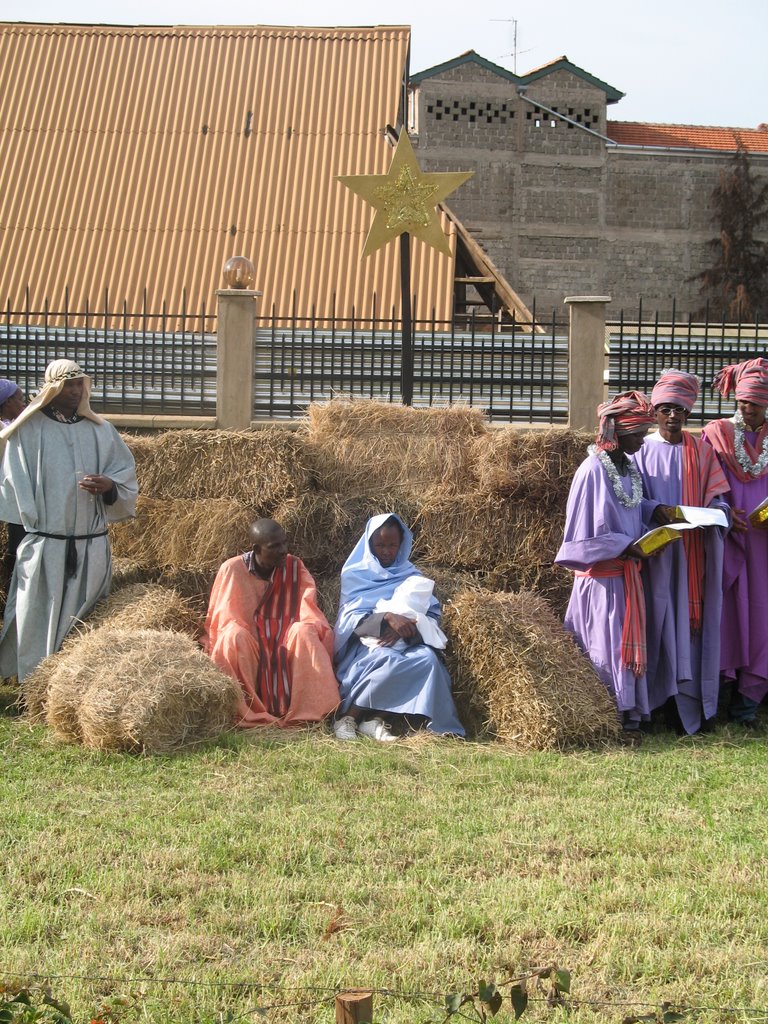
Next, we joined Pastor Bob and his family for Ethiopian food, and then it was back to church to participate in a live Nativity scene... there were wisemen, shepherds, cows, goats, Mary, Joseph, and an entire host of angels raising their voices in songs to celebrate the birth of Christ... it was beautiful, and the look on the faces of those passing by was priceless. As afternoon faded to evening, we all made our way into the sanctuary for the Christmas eve service, for a time when God's love and acceptance were evident in the community all around me. This year, I have been more able to see Christ as the original Christmas gift... without the promise of Santa Claus, I could look forward to the revelation of God's magnificent love through Jesus. As the noise of the afternoon quieted, the words of a familiar carol struck me afresh:
Silent night, holy night!
Son of God, love's pure light
Radiant beams from your holy face,
with the dawn of redeeming grace,
Jesus, Lord at your birth.
Jesus, Lord at your birth.
As we sat in the candlelight, in anticipation of that miracle of all miracles when God became man, I thought of the impossible hope, the joy, the healing that are bound up in that child, and I prayed for Christ to be born again, to be born in me.
Tuesday, December 12, 2006
Children of Korogocho

As Kari and I go to work each day in Korogocho, we have developed quite a following among the local children. We have had the unexpected blessing of getting to know some of these small, small ones as we wait for the girls we are tutoring to arrive each day. We dance and play, and sing the "banana song" together each morning... their smiles and laughter are absolutely infectious, so I wanted to share a piece of it with all of you.
Jesus said "let the little children come to me," and He must have meant the screaming, mischievous masses of barefoot little ones who run through the streets here. Who yell out "kawaru! kawaru!" which means potato instead of "how are you?" and then scamper off giggling as Kari and I walk by. To look at their surroundings, I see pain and poverty, but to look in their faces, there is all of the joy and playfulness of childhood.
For more pictures:
http://www.kodakgallery.com/ShareLandingSignin.jsp?Uc=ao36oqbn.3nv7bn8b&Uy=jm2qtn&Upost_signin=Slideshow.jsp%3Fmode%3Dfromshare&Ux=0&UV=154977108073_212627238107
Thursday, December 07, 2006
Out of My League
As I have mentioned before, Kenyan schools operate on a different time schedule than their American counterparts... 1st term lasts from January until the end of March, 2nd term lasts from May until the end of July, and 3rd term lasts from September until the end of November. With that being said, my school recently closed for holiday, and I am now in Nairobi. When Kari and I left Icaciri, we had no idea where we would be volunteering this month or what we would be doing. After a few days of uncertainty and a few meetings with our coordinator, Phyllis, we got a phone call instructing us to meet at St.Andrews PCEA church at 8:00 last Wednesday morning. Little did we know what was in store for us.
We met Rosemary at the specified time and proceeded to follow her through the crowded streets of Nairobi to a matatu stage downtown. As it turns out, we spent most of last week working with the TULIP ministry at a camp for girls in Korogocho, one of the city slums. Never in my life have I been anywhere like a Kenyan slum. As we walked through narrow alleyways with rusty homes made from whatever scraps of tin could be found, trying to avoid the streams of sewage and refuse that ran through the garbage paved paths, I wondered what the girls we were on the way to meet would be like. Would they be bitter? Would they be angry? Each day last week, we spent time in Bible study, listening to speakers, and practicing vocational skills along with about 60 teenage girls. We sang with these girls, we ate with them, we laughed with them, we strung together beads for bracelets and necklaces. Girls who have grown up in the slums, who have dealt with all of the difficulties that life at the bottom of the third world means. Girls who have watched their parents and friends suffer and die of AIDS, girls who know what it means to be abandoned, to be hungry, to look at life and see only darkness. And yet they themselves are the light. They are the hope and beauty of tomorrow. Through the TULIP ministry, the girls that qualify are sponsored in secondary school and therefore have a chance to get an education and to end the cycle of poverty that traps so many women and children.
There were and are definitely moments when I look around at our surroundings and think I have no idea what I am doing ... I have absolutely no experience to prepare me for this... I am way out of my league here. Yet God has been with me each moment, and He has shown me how real faith can be. As I sat with Group 9 in Bible study each morning, I was amazed at the strength demonstrated by each girl. I found myself asking "what difference does God make here?" and they continually reiterated the fact that God makes all of the difference.
We met Rosemary at the specified time and proceeded to follow her through the crowded streets of Nairobi to a matatu stage downtown. As it turns out, we spent most of last week working with the TULIP ministry at a camp for girls in Korogocho, one of the city slums. Never in my life have I been anywhere like a Kenyan slum. As we walked through narrow alleyways with rusty homes made from whatever scraps of tin could be found, trying to avoid the streams of sewage and refuse that ran through the garbage paved paths, I wondered what the girls we were on the way to meet would be like. Would they be bitter? Would they be angry? Each day last week, we spent time in Bible study, listening to speakers, and practicing vocational skills along with about 60 teenage girls. We sang with these girls, we ate with them, we laughed with them, we strung together beads for bracelets and necklaces. Girls who have grown up in the slums, who have dealt with all of the difficulties that life at the bottom of the third world means. Girls who have watched their parents and friends suffer and die of AIDS, girls who know what it means to be abandoned, to be hungry, to look at life and see only darkness. And yet they themselves are the light. They are the hope and beauty of tomorrow. Through the TULIP ministry, the girls that qualify are sponsored in secondary school and therefore have a chance to get an education and to end the cycle of poverty that traps so many women and children.
There were and are definitely moments when I look around at our surroundings and think I have no idea what I am doing ... I have absolutely no experience to prepare me for this... I am way out of my league here. Yet God has been with me each moment, and He has shown me how real faith can be. As I sat with Group 9 in Bible study each morning, I was amazed at the strength demonstrated by each girl. I found myself asking "what difference does God make here?" and they continually reiterated the fact that God makes all of the difference.
Monday, December 04, 2006
Photo Album
You can view pictures from my past few months in Kenya at the link below:
http://www.kodakgallery.com/ShareLandingSignin.jsp?Uc=ao36oqbn.9b4wiwnn&Uy=-mttlcs&Upost_signin=Slideshow.jsp%3Fmode%3Dfromshare&Ux=0&UV=199855143117_320490397107
http://www.kodakgallery.com/ShareLandingSignin.jsp?Uc=ao36oqbn.9b4wiwnn&Uy=-mttlcs&Upost_signin=Slideshow.jsp%3Fmode%3Dfromshare&Ux=0&UV=199855143117_320490397107
Tuesday, November 28, 2006
November Newsletter
 Give thanks with a grateful heart,
Give thanks to the Holy One,
Give thanks,
Because he’s given Jesus Christ his son.
And now, let the weak say “I am strong,”
Let the poor say “I am rich,”
Because of what the Lord has done for us.
Give thanks.
My life in the past few weeks has been comprised of very ordinary occurrences. I have been teaching biology each day to my Form 1 (freshmen) students and teaching Christian Education to two of the older classes. I wrote an examination and then graded somewhere over 200 examinations in return. I walk to town and buy produce in the local market where the colors and smells are as tangible as the tomatoes, onions, and pineapples themselves. I actually spend a large amount of time washing my clothes, and I am quite convinced that God is paying me back for every single time I packed up a month's worth of dirty laundry in Lexington, VA and drove it down home to Darlington for my mom to wash. Now I would be quite happy to put my own clothes in the washing machine, but instead, I put my clothes in my grayish-silver bucket, boil some water, scrub each piece individually, rinse them thoroughly, and then hang them out to dry, which takes a bit longer during the rainy season. Life is becoming more settled and routine. I am learning what it really means to live here. As I walk down the road now, children stop and greet me with a smile instead of running away screaming or laughing hysterically. I spend time with our students, singing, dancing, talking, worshipping. They have a million questions for Kari and I about life outside of Kenya, and I have just as many for them about their lives and culture. When we leave school now for meetings in the city, our students hang out of the windows shouting about how much they will miss us.
Every Sunday Kari and I attend two worship services at Icaciri. First, we participate in a student lead service at 7:30 that I can hardly describe. Each morning we walk in to dancing, twirling, girls shouting praises at the top of their lungs. It is magnificent. Afterwards, we stick around for the community service which is completely in Kikuyu. As I sit through this service each week, I realize that even though I can't understand most of the words, there is something familiar and comforting about the commnity of faith, something that makes Icaciri PCEA Church feel like home thousands of miles from my actual home. There is something reassuring about the words of the Lord's Prayer being recited in unison, even if they are not my words. Living here has helped me to realize the connection that each of us shares with the rest of humanity. Every time I walk down the street in Nairobi or look at the faces of my students, I am thankful for the beauty and diversity that exists in our world. I realize over and over again how great our God must be that He made each of us as individuals. What speaks to my soul may be different from what speaks to yours. Yet we are all made in God's image, and that image is reflected differently in each of us. The image of God is made manifest in hundreds of races and ethnicities, in thousands of languages, in millions of faces throughout the world. In Kikuyu the word for God is Ngai, in Swahili it is Bwana, the Jews called Him Yahweh, we call Him Lord. And He answers to every single one, and He delights in each of us when we call out to Him.
Swahili phrase: Asante sana. Thank you very much.
Saturday, November 18, 2006
Unexpected Blessings
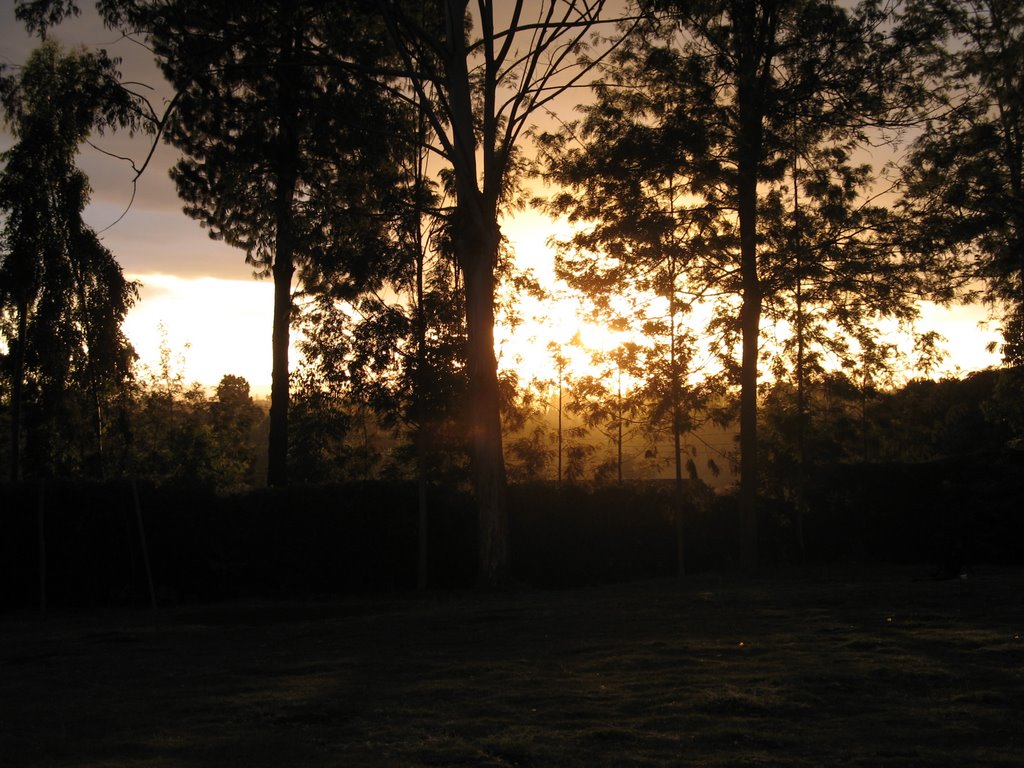
Take off your sandals, for the place you are standing is holy ground."
Exodus 3:5
There was a moment a few weeks ago when I looked around at my students and could only think about how different we are. I could only see that they had grown up in rural Kenya, that most have never had electricity or dependable water, that their families and traditions look nothing like mine. I was mad at the rain that drenched me only hours before, and as I sat looking at a family struggling not to lose all that they had, the absence of God was more evident to me than His presence.
Yet as we rode home on the bus at the end of the afternoon, the air was filled with the joyful noise of our students singing praises to mighty God. Their energy and laughter brightened my soul as I could feel the gracious voice of my Lord whispering: I am still here. I am still with you, in the midst of darkness and doubt, I will not abandon you. Despite times of frustration and doubt here, always one crucial fact remains:despite the disparity between rich and poor, sick and healthy, American and Kenyan, black and white, Christian and Muslim , young and old, beneath all of our labels and differences, we share one basic thing, and that is life. We all have, for this brief moment, each of us, a part in the beauty and the pain, the ordinariness and the sanctity of this mystery that we call living. We are all bound to one another simply by our being. And perhaps in these ordinary moments, in a market or on a school bus, these times when we share ourselves with one another, these are the moments that are sacred, these are the times when we are sitting or standing or riding on holy ground. I expected the afternoon to be tedious and ordinary, yet how glorious is our God that He turns what we expect to be ordinary into unexplainable blessing. The songs of my students were their gift to God, which He in turn shared with me.
Friday, November 17, 2006
Harambee
Harambee is an ideal left over from the Kenyan struggle for independence which means a "coming together" or "uniting." It is a beautiful sentiment and leads to beautiful events where entire communities come together to support one another in times of need or crisis. My first experience with a harambee came last Saturday as all of the teachers and staff from Icaciri were invited to participate in the support of a family in our community. One of the Form 1 or freshmen students, Margaret, passed away from heart failure the same week that I arrived in Gatundu, so one of my first experiences here was her burial. Unfortunately medical care is scarce in rural areas and expensive when it is available, so her week long hospital stay cost her family everything that they had in terms of money, and they were forced to offer the title deed to their land as payment. Here in Central Province, land means much more than just the place where a family lives, it is their livelihood and a guarantee that they will have food and provisions for the future. For a family already struggling to survive, to lose your land is an unthinkable detriment. So, on Saturday, people from our commnity came together at a local PCEA churh to share music, food and laughter and to offer money and prayers in support of this family. The people of our community offer whatever they have, whether it is much or it is little, in the hope that the family who already lost their first-born daughter will not lose their land as well.
One would think harambees would be somber, penitent events of mourning or sorrow, but indeed they are not. Saturday was an afternoon filled with joy, singing, and most of all hope. Hope in the power of people united for a common purpose, hope in the promise that when someone falls, a neighbor will be there to pick them up. Hope that has illustrated for me more powerfully than anything else what the body of Christ should look like.
One would think harambees would be somber, penitent events of mourning or sorrow, but indeed they are not. Saturday was an afternoon filled with joy, singing, and most of all hope. Hope in the power of people united for a common purpose, hope in the promise that when someone falls, a neighbor will be there to pick them up. Hope that has illustrated for me more powerfully than anything else what the body of Christ should look like.
Saturday, November 04, 2006
Happy Birthday Wambui
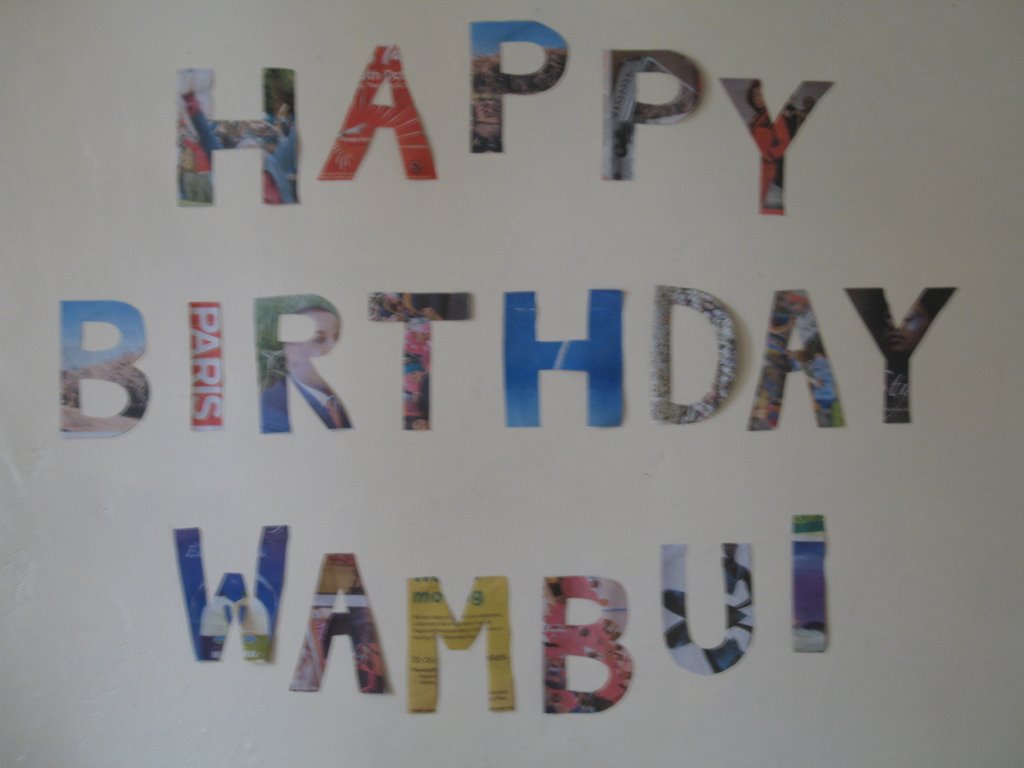
Many of you are probably wondering who Wambui is. Well, in the Kikuyu alphabet, there is no "L" and the "R" is pronounced differently than ours, which makes Lauren one of the hardest names imagineable. Therefore, after about two weeks of butchering my name in every conceivable manner, my colleagues christened me Wambui, a simple, easy to pronounce Kikuyu name. I now answer to either.
I woke up on the morning of October 29 at about 6:30 am to the sun shining through my mosquito net and the sound of African drums marching across the field as our girls prepared for Sunday worship. It was a beautiful day, and as I made my way out of bed and into the kitchen, I realized that my wonderful roommate had decorated our entire home with streamers, blown up latex gloves, and newspaper letters with a special birthday message. It was incredible!
After our breakfast of tea and mandazi, we made our way to the student worship service where we sang and danced and laughed much like we do every Sunday. We also stuck around for the Kikuyu service that the older members of the village attend, and we both ended up with children on our laps playing a "moja... mbili... tatu" version of pattycake that Kari invented last week. Naomi is a little girl of about 3 years who absolutely brightens my day with her smile every single time I see her, so it was a beautiful blessing to sit with her through the service that I cannot understand. It was such a joy to spend so much of my birthday praising the Lord who created me and who loves me more than any other.
After worship we returned home, I got to open some presents, we fixed lunch, and spent much of the afternoon doing laundry and getting dancing lessons from some of our students. I cannot think of a better way to celebrate the life God has given me than by spending it with those He has called me to serve.
Thanks to all of you who also made my birthday special with your cards, letters, and e-mails, I am continually humbled by the love and support I feel from all of you. God bless.
Short Rains
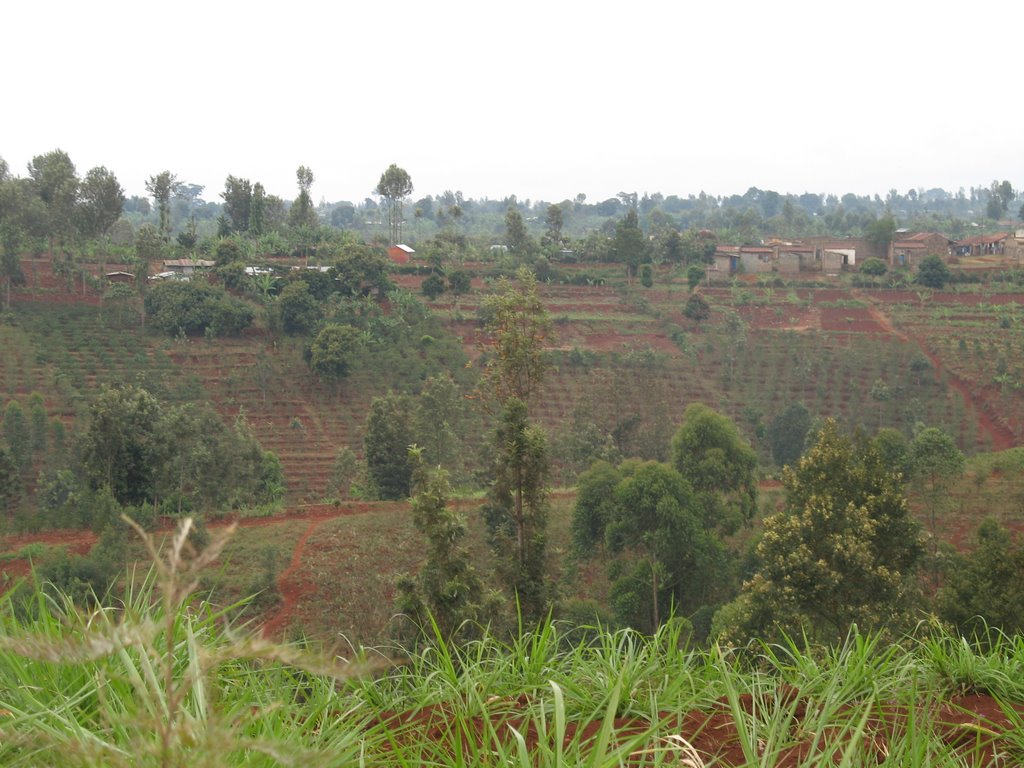
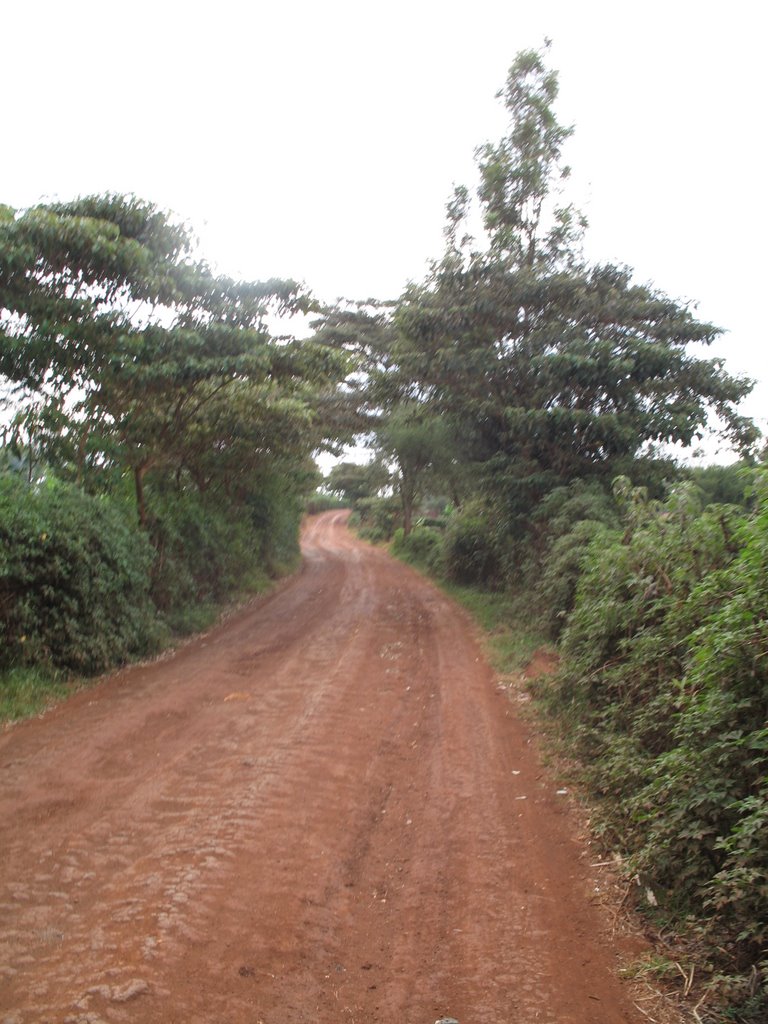
The entire time I have been in Kenya, I have heard people talking about the short rains that begin in October, and I have wondered what that would mean for my life. Well, they finally started, and basically it means that the sky is fairly sunny during the day, but it pours rain at nighttime. The farmers that live in my community are thrilled, and any time I walk down the road I can find women working in the shambas just as happy as can be about the rain that means food is guaranteed this season. However, the rain and I are not on such friendly terms. First of all, every road in my life right now is made of red clay, and when it rains, the clay turns to mud and sticks to everything it touches including my shoes and clothes. Even worse than the mud, because mud is an issue I could foresee and expect, there are bugs. Our house is totally and completely infested with every type of insect imagineable. Every night, hundreds of buzzing, flying, crawling, swarming things invade our house seeking sanctuary from the rain. There are bees, wasps, termites, flying ants, beetles, spiders, fruit flies, house flies, winged worm things, and, of course, mosquitos. Every night a new battle begins between me and the insects, but I am afraid I am losing. I can't explain how much amusement and frustration these creatures bring to my life. There are a lot of problems and challenges that I expected when I decided to move here, but I guess I never thought I would spend so much time armed with a rolled up paper, spinning in circles, swatting at the air.
Saturday, October 28, 2006
October Newsletter
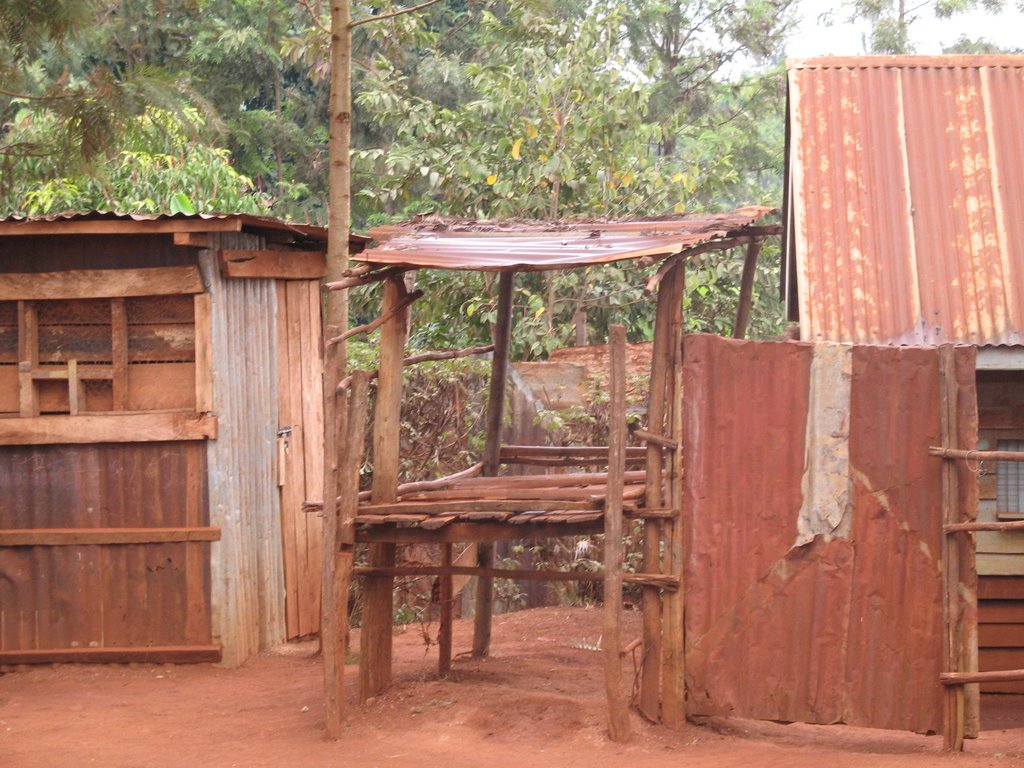
Muriega! My second month in
Life in rural
Despite the gracious hospitality and seeming availability of fresh produce, I come face to face with hunger and poverty every day both within and outside of the Icaciri compound. Just this week about a third of our students were sent home for failure to pay school fees which amount to about $400 a year. You see, primary education in
Some of the problems here seem rather overwhelming to me with my very American sensibilities, but in every conversation that I have with a Kenyan, they insist that "
The time to be happy is now,
the place to be happy is here,
and the way to be happy is to make someone happy
and to bring a little heaven down here.
Mungu awabariki,
Lauren
Tuesday, October 17, 2006
Learning to Laugh
 I have always thought that I am pretty good at being able to laugh at myself, but Kenya has taught me a new appreciation for this skill. You see most of the time in Gatundu everyone else is laughing at me, so I have little choice but to join in the fun. From our very first day at Icaciri, the students have enjoyed my accent and the differences in my hair and skin color. They spend a great deal of time during worship watching me fail miserably at the traditional dances that must seem so natural to them.The teachers, too, join in the amusement, and make a game of trying to pronounce words the way that I do, or of watching my face as I hesitantly try to chew up goat intestines at lunch.
One afternoon as Kari and I walked a little ways down the road to get some bananas, a group of primary school children stood in their yard literally pointing at us and laughing so hard that they were falling over.
Similarly, on a recent visit to the market, I walked up to one of the local sellers to buy a basket so we could carry our vegetables home, and upon simply saying hello, the lady burst into hysterical laughter. What? Then I remembered, many of the older villagers speak only Kikuyu, so I am sure my English sounds like nonsense to her.
Every time we leave the school compound, groups of primary school children follow us down the road giggling and whispering in Kiswahili, and I feel like a very real version of the pied piper.
While drinking a coke one time at a kiosk near our school, a little girl approached us, very slowly and cautiously. When she was close enough, she peeked up at Kari and I with wide eyes, we smiled at her and asked habari yako? Immediately she turned and ran screaming in the other direction. I don't think I have ever scared a small child before, but the other people gathered at the stand found the incident hilarious. Of course.
At times, I get frustrated at people's reaction to me. I am tired of repeating myself countless times and of having to explain things in five different ways before I am understood. Then I remember that I am a guest here. Everyone I have met has been immensely patient with me as I butcher their language and misunderstand their customs. I can't even pronounce some of the Kikuyu vowel sounds because my mouth refuses to move in certain ways. Yet my teachers are loving and encouraging; they rejoice with me at even the smallest successes. If I remember a word for even a couple of days, they are incredibly impressed.
As I look at my life here, I wonder how much time our Lord must spend laughing at the situations that He has led me into. What a sight it must be to Almighty God watching two wazungu walking down a dirt road surrounded by a bunch of barefoot children trying to communicate in any way that doesn't require actual words. How funny He must find it when I repeatedly say I am fine instead of How are you? when greeting people in Kikuyu on the road. What a God we worship that He would fill my days with such joy and laughter.
Monastic Vows

Who knew that so much of my experience here in Kenya would be involved with brothers at a Benedictine Monastery? Or that so much of what I would learn would come from their selfless attitude of service and joy? Yet a couple of weeks ago, I found myself waking up to my alarm at 5:45 am, making the 4 km trek into Gatundu town, catching a matatu to Nairobi, a 6/9 bus to the city centre, and another vehicle the 45 minutes to Limuru so that we could make it in time to witness the ceremonial vows of five of the brothers we met during our earlier stay in Tigoni. They had lived and worked at the monastery for five years, and were now committing themselves to a lifetime as brothers. Of course, as travelling goes here, we were about thirty minutes late, but we made it just in time to hear the vows explained. They included stability and constancy in seeking God's will and searching for Him in all things, conversion and committment to a monastic lifestyle, and obedience to the superiors. It was an experience I find hard to articulate as I sat and watched the five brothers standing up there repeating their vows and was able to think about the community and way of life they committed themselves to. What a great mystery it is when God calls us to Himself, to abandon all other aspects of life out of love for Him, and what an even greater mystery when He then gives us back all of the wonders and joys of this life in a truer and more beautiful form. When we can experience love, faith, community, and humanity as they were intended.
When we first decided to attend the service, I assumed that monastic vows would be a dark, somber ceremony, full of rituals and chanting. At Tigoni, however, the entire day was full of joy, laughter, praise, dancing, and embraces... it was quite the celebration! The excitement was absolutely contagious. The chapel was decorated with streamers and balloons, and after the new brothers signed their vows, they got a hug from every single member of the monastery.
As they lined up for the Holy Communion procession, Kari and I were standing in the back of the chapel (since we were late) and Brother John called me over to carry the ceremonial wine and cup. Now I am neither Catholic nor Kenyan, so I nearly dropped the whole tray from shaking. But that is how they do things there, with a smile and a chuckle, everyone is included.
It made my day when a group of nuns preceeded those of us carrrying the sacraments and made their way down the aisle dancing and singing! It was one of the liveliest and most vibrant expressions of joy I have ever seen, and the entire ceremony did a remarkable job of combining Catholic tradition with a spirituality that is uniquely African.
Monday, October 16, 2006
My New Home
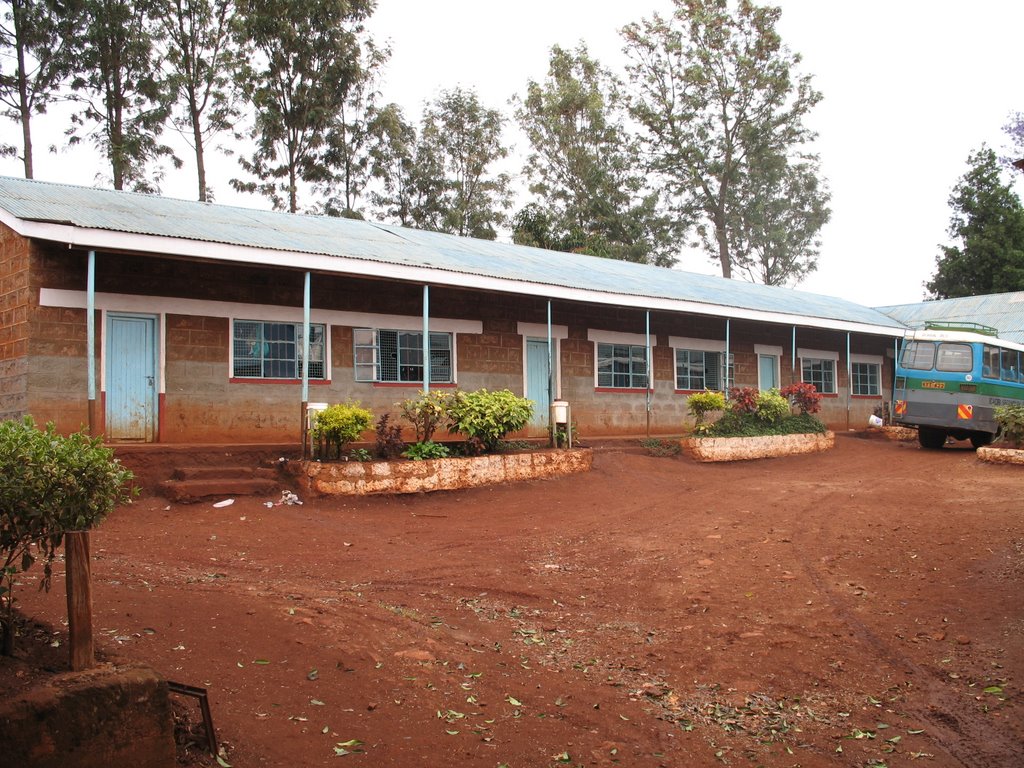
Mwathani agocwo! Sorry it has been such a long time since my last post... at the end of September we finished orientation, and I moved out to my placement for the year. I am now living at Icaciri Secondary School about a 4 km walk from Gatundu town up a red clay road that is going to be pretty impassable during the short rains later this month. Our school has about 300 students, 200 girls who board on campus and about 90 boys who are day scholars from the surrounding villages. It is definitely more rural than Nairobi, and I love it!
There is one other volunteer, Kari, stationed with me at Icaciri, and we are sharing a flat on the school compound. There is no electricity where we live except for three hours in the evening when the school generator is on from 7-10 pm, but we don't really need it for anything except light when we are cooking dinner so it hasn't been an issue thus far. Our kitchen consists of a sink, a counter, a single propane burner, and a small table for storing vegetables from the local market. Luckily we do have running water (most of the time) and a filter to make it drinkable.
Our first day at school was hilarious. Since we are more in the interior of the country now and away from the city, many of the villagers, including our students, have never interacted with a mzungu before. Kari and I got out of the car to shrieks of laughter and pointing from the windows of every classroom. Our first walk around that night ended up with us in a circle of about a hundred girls all patting our arms and rubbing our hair. Every time we opened our mouths to speak there was a fresh peel of laughter as our accents and version of English are much different than the Kenyan version. Luckily the girls are getting more used to us every day, and we are learning about a side of Kenya that we hadn't seen before.
I am teaching biology to the Form 1 students which is roughly equivalent to ninth graders in America. The school system is a lot different from ours, but very similar to the British system from what I hear, a remnant of colonial times and institutions. I think I will also have the chance to help teach CRE (Christian Religious Education) to some of the other Forms which should be an adventure as the Kenyan church and theology are uniquely their own as well.
I finally have an address and can receive letters at the school PO Box, so feel free to write to me anytime!
Icaciri Secondary School
PO Box 66
Gatundu 01030
Kenya
Tuesday, September 26, 2006
September Newsletter
Hamjambo all! As I sit here tonight and look back at the last month of my life, I cannot help but realize that it has been a continuous lesson in both humility and flexibility. Since the night we arrived at Jomo Kenyatta airport in Nairobi, Kenya late on the evening of August 29, it has been a whirlwind of culture and activity.
During the past four weeks, I have lived in a missionary boarding house, in the home of a Kikuyu family, in a Benedictine monastery, and in the guest house of a convent. I have been to multiple churches and denominations, as well as a Hindu spirituality center. I have been to an AIDS orphanage to feed and care for abandoned babies, and learned how to bargain in Swahili at the traditional Massai market. I have learned about the politics and history of a country that is not my own, and I have tried to understand a people who look and sound totally different than myself. I have walked the streets of a rural village and heard the children chanting "Mzungu! Mzungu! How are you? How are you?" (mzungu means "white person" in Swahili) Through all of it, I have met God in unexpected places and unknown people.
One of the most profound examples of this type of blessing occurred this Sunday when I attended church with a student from the nearby St. Paul's seminary. I have to admit that I was dreading this experience, for it was another in a long line of activities, and I was going to an unknown location with a stranger I had yet to meet. As we made our way across the early morning Nairobi streets, I couldn't help but think I would much rather have slept an extra two hours and then gone to church with the other volunteers. About forty-five minutes and three crowded matatu rides later, we arrived at St. Peter's Anglican Church in Kahawa Sakuri, a part of the city I had not previously visited. We got there a few minutes before 8:00 am, just in time for the minister to ask me to say "a few words of encouragement" at the early morning youth service. From the moment the service began, I felt the joy of God's presence with us as we joined together in songs of praise and thanksgiving. The entire service was full of energy and enthusiasm for the Lord, and the worship team was excited about knowing God and sharing Him with others. One thing about African worship, they know how to rejoice! By the grace of God, I managed to stand and say a few words of introduction in my broken mixture of Swahili and English. After the service, I attended the youth Sunday school class, during which time I had a better chance to interact with the youth and their leaders. I got to listen to their thoughts and ideas. I got to hear them talk personally about their faith, and what God means in their lives. When it came time for introductions, every person stood to say their name, and then added that they were "saved" or "born again" and that Jesus Christ is their Lord and Savior. I was struck by the fact that one of the most important identifying factors in their lives is Jesus Christ. What if we all identified ourselves that way? I have had to introduce myself dozens of times recently, and it usually includes my name, my hometown, my university and degree, and the location where I will be serving this year. What if I just said: Hi. My name is Lauren, and I am in love with Jesus Christ who saved me. What if I stopped trying to sound impressive, stopped trying to earn respect or recognition and realized that everything I need can be summed up in that one sentence. The only status that actually matters is that I am loved by Almighty God.
Here in Kenya, they have a much deeper grasp of this fact. Yes, Kenya has problems: poverty and disease are running rampant, the streets are dirty and crowded, the slums are overflowing with individuals who cannot find a permanent home, and yet there is life here. There is humanity here. There are beautiful, capable people who have put their trust in the Lord, and who are in love with the same Savior that I have come to know and to love. As we took communion this Sunday, I was reintroduced to the God who cuts across all of our make believe borders. For the God we worship in America is the same God worshipped here in Kenya: He is the God of justice and mercy, the God of the physically sick and politically oppressed. He is the God who gives rest to the weary and food to the hungry. He is the God who gives us privilege so that we can use it to make a difference in the lives of our brothers and sisters around the world, the God who unites us all through the body and blood of His Son.
In the coming week, I will be moving out of the city into my permanent placement for this year. I will be heading to Ichachiri High School, in Gatundu, a rural village in the Kiambu district. As I go, I pray that God will continue to challenge me, that He will continue to stretch my identity and my faith. I love you all, and thank you for the encouragement and support that has allowed me to come and to serve here.
Blessings,
Lauren Scharstein
Saturday, September 23, 2006
A Funny Story
So this is my second post for the day, but I really want to share this story with you all.
Before I begin, please keep in mind that things do not always work as they are expected to, and flexibility is a skill that must quickly be developed... a lesson Taryn got the chance to relearn last night.
You see, she was doing a very normal thing: going to the bathroom in our new home at the Assumption Sisters Convent. The problem occurred when she tried to leave said bathroom: the door wouldn't unlock. I don't mean like it was kind of stuck, and she just needed to push a little bit or turn the key a little harder, she was stuck. We tried everything imagineable to get her out: a credit card, vaseline, a screwdriver, pliers, a nail file, a hammer, and the actual key. Nothing worked. The door wouldn't budge. Finally, one of the sisters came, looked at us like we were crazy white people all crowded around the bathroom door talking to Taryn and then proceeded to try all of the tools we had already found useless. After about an hour and a half of our frustrated, yet hilarious efforts, the sister came back with a crowbar and basically broke down the door: Taryn was free.
If at any point during the week you feel sad, just picture a nun walking down the hall in her nightgown with a crowbar and a pair of pliers, it will undoubtedly brighten your day. :)
Careful - Kind of Gruesome
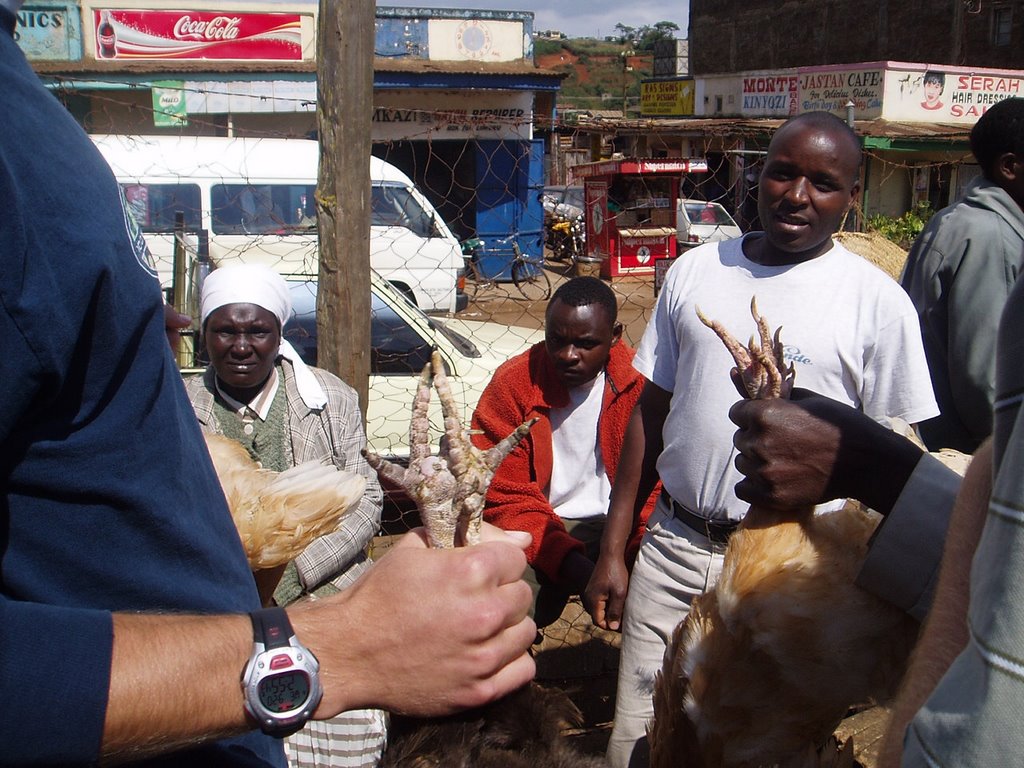
I will have to say that last Thursday was one of the most emotional days I have spent here in Kenya. We woke up in the monastery just like every morning for the past two weeks, but this particular day we had the task of first slaughtering then preparing our own lunch. That meant that we started off with a white goat and six brownish chickens and ended up with a bucket full of nyama choma and a pot of chicken stew. Needless to say it was all of the steps in the middle that were difficult...
Here in Kenya, slaughtering a goat is a celebration. It is a time of joy and fellowship when communities come together to feast and give thanks for the gifts they have received, for us it was a challenge. Luckily,it is also a man's responsibility, so Stephen, Paul, and Kirk were elected for the task. This meant tying its legs together, laying it out on the concrete floor, and then slitting its throat. I have to admit that the scene was hard for me to watch, as a goat is a pretty fair-sized mammal, and it screamed in a way that was both chilling and nauseating at the same time. Once it was over and most of its blood had drained into the floor, they hung it up on a metal hook to begin the process of skinning and dismembering it. At this point it was time for us to take care of the chickens.
It felt more like a funeral procession as we walked from the butchery to the kitchen, and I think most of us were realizing how disconnected we are as Americans from the source of our food. Brother Sylvester caught one of the fastest chickens and demonstrated what we were supposed to do: first catch one, pin down its legs and wings with your feet, pluck the feathers from its throat, stretch the neck out over the drain, and cut. Kari went first and successfully slaughtered her bird, and I decided to go ahead and get it over with next. At no other point in my life have I picked up a living, breathing creature and put it back down a lifeless carcass. It was definitely a different feeling to cut through the skin and flesh of a live chicken and then continue holding it until it stopped flapping. I was more than a little shaky when I finished. From there we plucked the birds, emptied their organs, sawed off the legs and proceeded to slice them into a more familiar sight, similar to what we see on the grocery store shelf.
As I thought about our activities both during and after that day, I began to realize what little knowledge I have about life in most countries. Everything in the third world is more labor intensive and more connected to the earth than it is in my world. Children here are not surprised or disgusted by the concept of slaughtering animals for their food, whether it be goats, chickens, or cows. Theirs is an innate awareness of where things come from and what it takes to survive. As an American, I am able to separate myself from the realities of life that permeate every aspect of this and most cultures. In order to have meat, you must kill an animal, in order to have vegetables, someone must grow them. I have definitely been more thankful for each meal I have eaten since then, not only for the food, but for all of the effort that goes into harvesting and preparing it. I haven't actually been able to eat any meat since that day, but I am better able to appreciate the role that other animals play in our lives, and to see the inherent connections that exist between ourselves and our world.
Monday, September 18, 2006
Not Zaxbys
Just in case you were wondering, here are some of the things I have eaten recently:
- nyama choma - this basically translates as "roast meat"... take meat to mean what you will, but in Kikuyu land it generally refers to goat
- mukimo - otherwise known as irio - this is a combination of potatoes, maize, various beans, and pumpkin leaves all mashed up together
- gulab jambu - boiled milk balls, which are deep fried and covered in sugar
Definitely not chicken fingers and fries!
Subscribe to:
Posts (Atom)
